
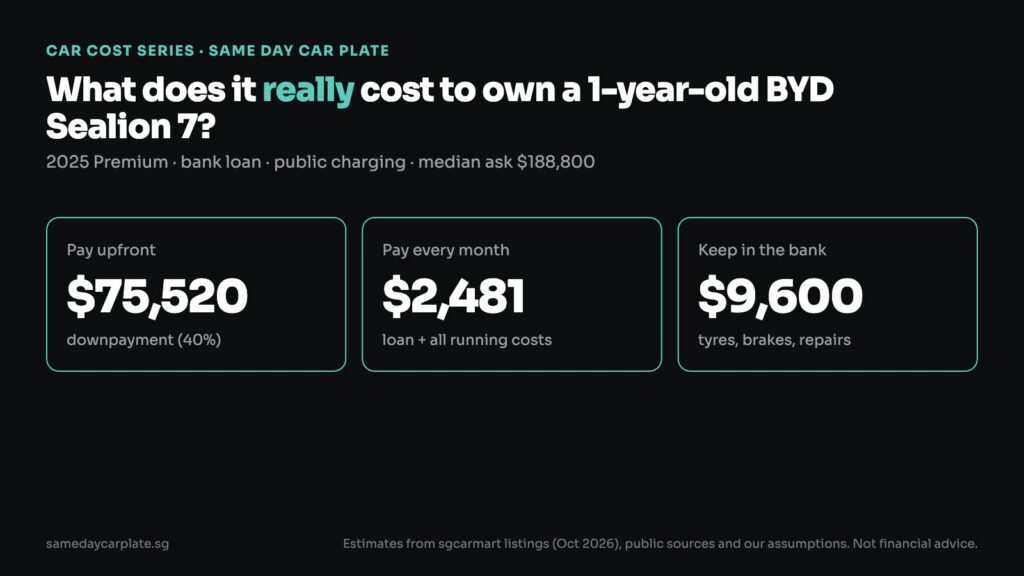
An electric car looks cheaper to run than a petrol one, but the sticker price, the loan and a few EV-only rules change the maths. We priced a 1-year-old BYD Sealion 7 Premium (registered in 2025, about 8.5 to 9 years of COE left) using sgcarmart listings from October 2026, and added up everything an owner pays: the downpayment, the loan, charging, ERP, parking, road tax and the EV surcharge, insurance, tyres and a cash buffer for repairs.
The short answer
| Item | Estimate |
|---|---|
| Upfront (downpayment) | about $75,520 |
| Every month (loan + all running costs) | about $2,481 |
| Cash to keep in the bank (tyres, brakes, repairs) | about $9,600 |
| PARF rebate at the end of the COE | about $2,950 |
These are estimates, and the ones we could not find a published figure for (insurance, tyre life, brakes and the emergency fund) are our own assumptions, flagged below.
1. The car and its price
We looked at 11 listings for a 2025 Sealion 7 Premium on sgcarmart in October 2026. Asking prices ranged from $181,800 to $190,800, and the median was $188,800. The car has an 82.5 kWh battery, a 230 kW motor, an official range of 480 km (WLTP) and weighs 2,225 kg. Road tax is $2,264 a year, which includes the EV surcharge.
The full ARF on this car is about $45,900, but you only pay about $5,900. EV rebates (the VES and the EEAI) cover most of it. This matters at the end, because PARF is worked out on the ARF you actually paid.
2. The downpayment: why 40%, not 30%
For used cars, banks must first reduce the car’s OMV by its age (age in months divided by 120) before applying the loan limit. This Sealion 7 has an OMV of $38,500, which adjusts to about $34,329. That is above $20,000, so the bank can lend at most 60% and you pay at least 40%. CPF cannot be used.
| Item | Amount |
|---|---|
| Car price | $188,800 |
| Bank loan (60%) | $113,280 |
| Downpayment (40%, cash only) | $75,520 |
3. The monthly loan instalment
The longest car loan allowed is 7 years (84 months). We assume 2.98% flat, the same rate as our other Car Cost episodes, so you can compare. Banks differ, so get a few quotes. A flat rate is charged on the full loan for the whole term, so the true rate is higher.
| Item | Amount |
|---|---|
| Loan amount | $113,280 |
| Loan length | 84 months |
| Interest rate (flat) | 2.98% |
| Total interest | $23,630 |
| Monthly instalment | $1,630 |
| Downpayment + all instalments | $212,440 |
4. Charging instead of petrol
The official figure is 19.9 kWh per 100 km. We add 10% for charging losses (our assumption). Driving 15,000 km a year (1,250 km a month) uses about 274 kWh a month. Home electricity is 31.16 cents per kWh (October to December 2026). Public chargers are about 70 cents per kWh for AC and 82 cents for DC (Charge+, Shell Recharge, CDG and SP Mobility, September 2026).
| Item | Cost |
|---|---|
| One full battery (82.5 kWh) at home | $26 |
| One full battery at a public AC charger | $58 |
| One full battery at a public DC fast charger | $68 |
| A month of charging, all at home | $85 |
| A month of charging, all in public (what we use) | $192 |
We use the public figure because most HDB residents cannot install their own charger. Installing one at a landed home or condo costs roughly $1,500 to $3,500, and a condo needs management approval. For comparison, petrol for our Corolla Altis episode was about $300 a month, so even fully public charging is cheaper.
5. ERP and parking
These are the same as for any car. We assume $90 a month for ERP (a light to heavy commute is $30 to $150), $110 a month for an HDB season parking ticket at home (condo and landed owners pay $0), and about $70 a month for parking when out (around 8 trips at about $8 each). The parking figure is our estimate for a typical driver who does not park at the office.
6. Road tax, the EV surcharge and insurance
Road tax for this car is $2,264 a year, which is $189 a month. It is made up of the power-based road tax of $782 per six months, plus the Additional Flat Component (AFC) of $350 per six months that applies to EVs.
EVs usually cost more to insure than similar petrol cars, because parts and repairs cost more. Third-party guides put a clean-record BYD in Category B at about $1,500 to $2,500 a year. We used $2,400 a year ($200 a month) as a conservative estimate. This is our assumption, so please get real quotes.
7. Servicing, tyres and repairs: cash to set aside
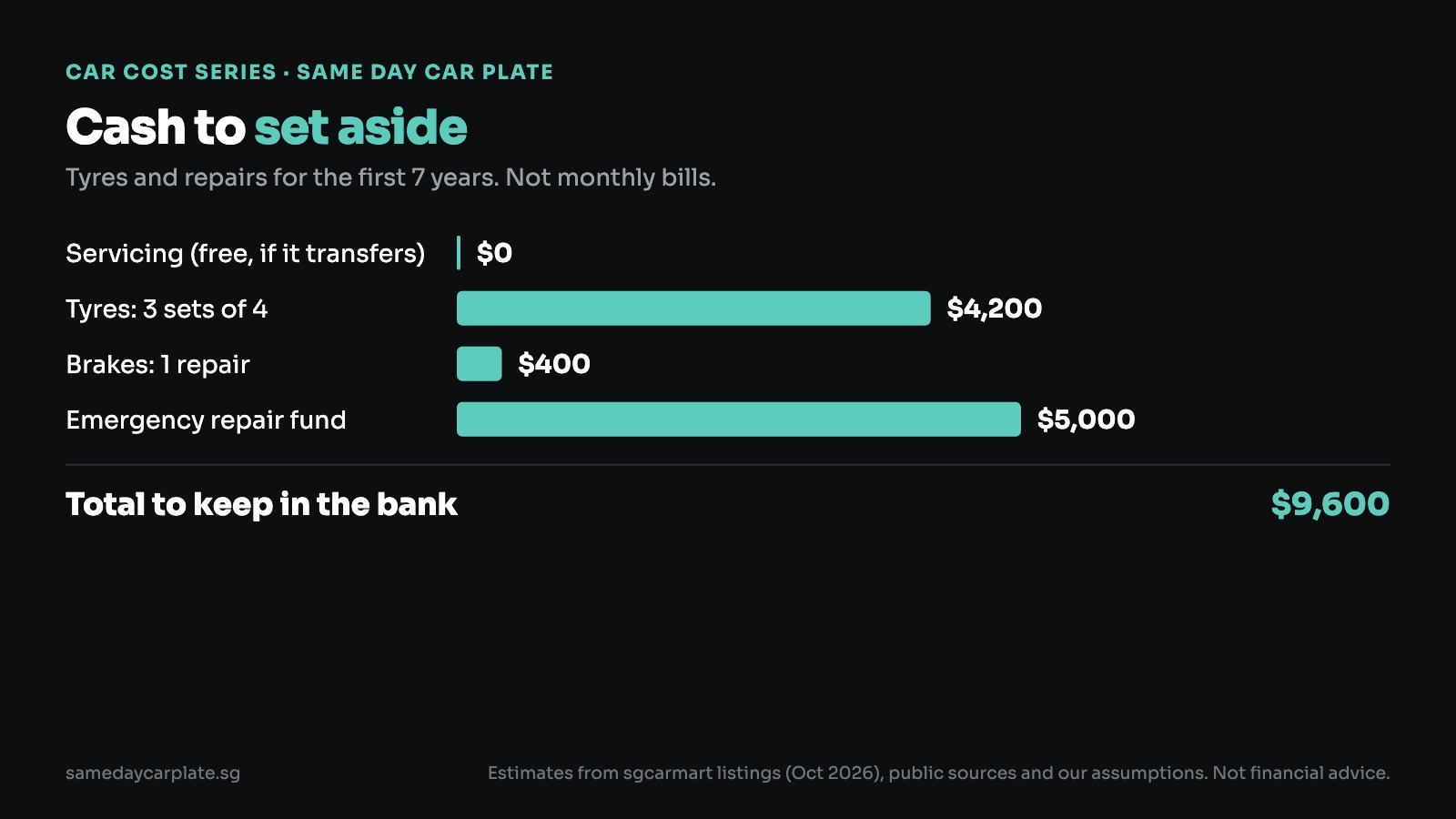
These are not monthly bills, so we treat them as cash to keep in the bank for the first 7 years.
| Item | Estimate |
|---|---|
| Servicing (10 years or 200,000 km free, see below) | $0 |
| Tyres: 3 sets of 4 (about $320 a tyre plus about $115 fitting per set) | $4,200 |
| Brakes: 1 repair ($300 to $600) | $400 |
| Expected maintenance | $4,600 |
| Emergency repair fund (aircon, 12V battery, suspension, electronics) | $5,000 |
| Total to keep aside | $9,600 |
SUV tyres in the 19 to 21 inch range cost about $200 to $450 each in Singapore, with a median of about $320, plus roughly $80 to $150 for fitting, alignment and disposal. EVs are heavy and deliver power instantly, and UK fleet data shows EV tyres lasting about 26% fewer kilometres than petrol tyres, so we assumed about 35,000 km a set. The brake figure and the emergency fund are our assumptions. Regenerative braking saves wear on the brakes.
Does the free servicing transfer to a second owner? BYD agents advertise 10 years or 200,000 km of free servicing and a 6-year or 150,000 km vehicle warranty, plus a 10-year or 200,000 km battery warranty. Used 2025 cars are listed with these included. However, we could not find BYD’s published terms saying whether they transfer to a second owner. Please ask the seller to confirm in writing. If servicing does not transfer, budget about $700 to $1,300 a year, because EV servicing is typically up to a third cheaper than the $1,000 to $2,000 a year for petrol cars.
8. Your monthly bill
| Item | Per month |
|---|---|
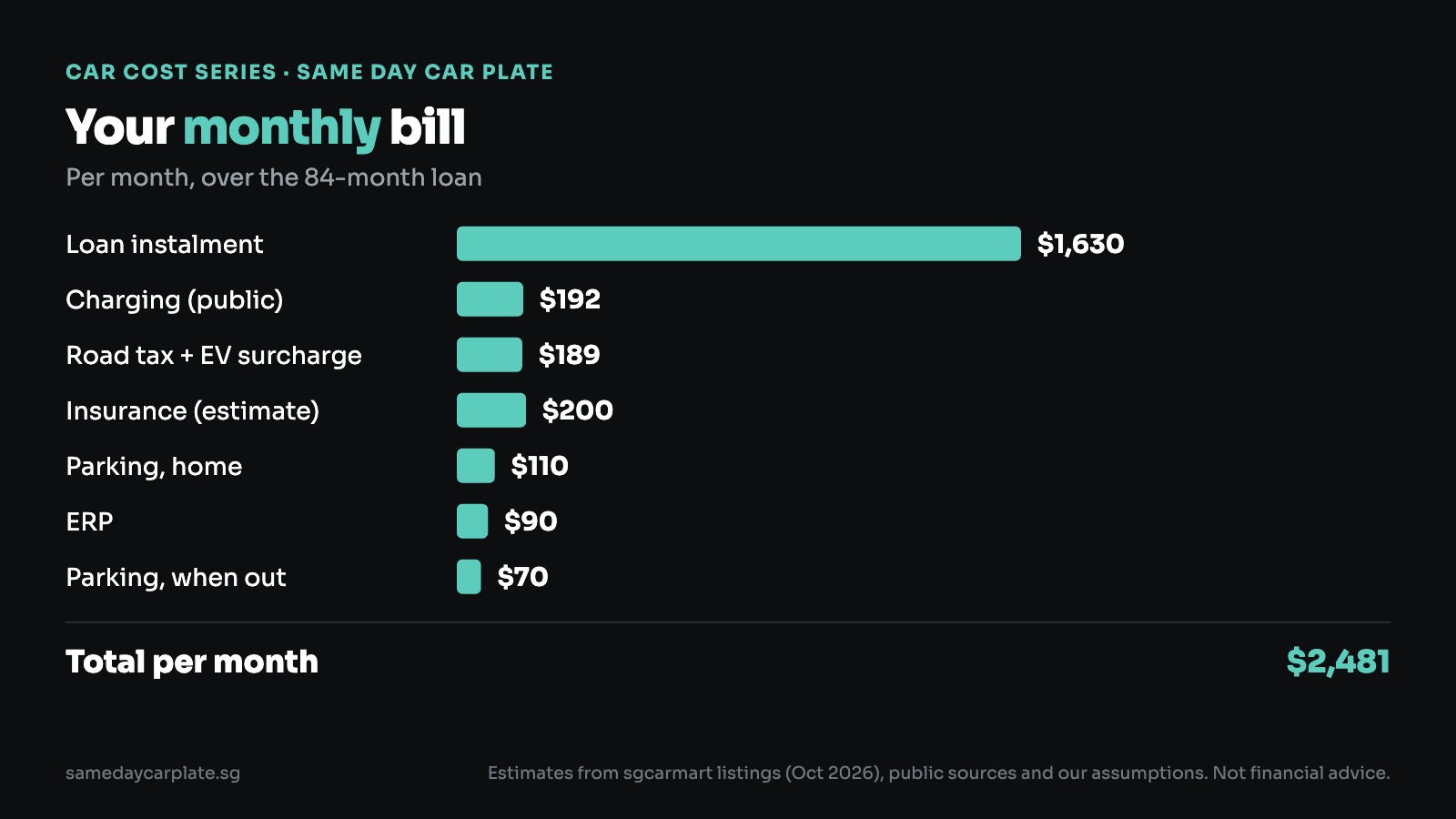
| Loan instalment | $1,630 |
| Charging (public) | $192 |
| ERP | $90 |
| Parking at home (HDB season) | $110 |
| Parking when out | about $70 |
| Subtotal | $2,092 |
| Road tax + EV surcharge (AFC) | $189 |
| Insurance (our estimate) | about $200 |
| Total per month | $2,481 |
On top of this you pay the $75,520 downpayment upfront and keep about $9,600 in the bank. After the 7-year loan ends, the bill drops by $1,630 to about $851 a month.
9. The end game: why PARF is tiny
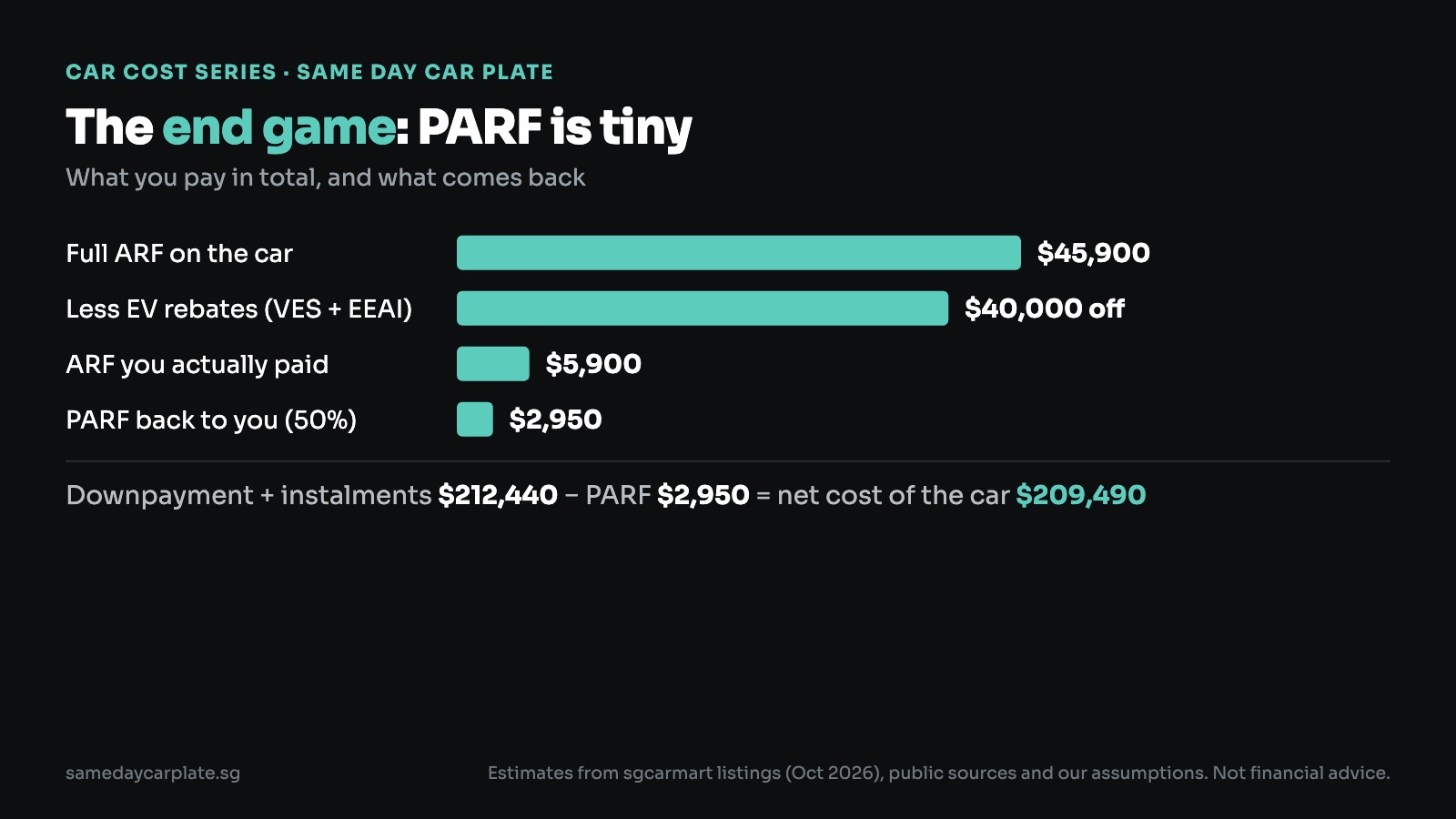
If you deregister a PARF car when the COE ends, you get back a percentage of the ARF you actually paid. For a car at 9 to 10 years registered in 2025, that is 50%. Because EV rebates cut this car’s ARF to about $5,900, the rebate is only about $2,950. The Altis in our earlier episode gave back about $10,600.
Cars registered from 2026 fall under a newer and lower PARF schedule (5% at 9 to 10 years), and the EEAI rebate ends after 2026, so a brand new EV gives back even less.
| Item | Amount |
|---|---|
| Downpayment + instalments | $212,440 |
| PARF rebate | −$2,950 |
| Net cost of the car itself | $209,490 |
A scrapyard may also pay for the metal body, but we could not find a reliable published figure, so it is not counted.
10. Can you afford it?
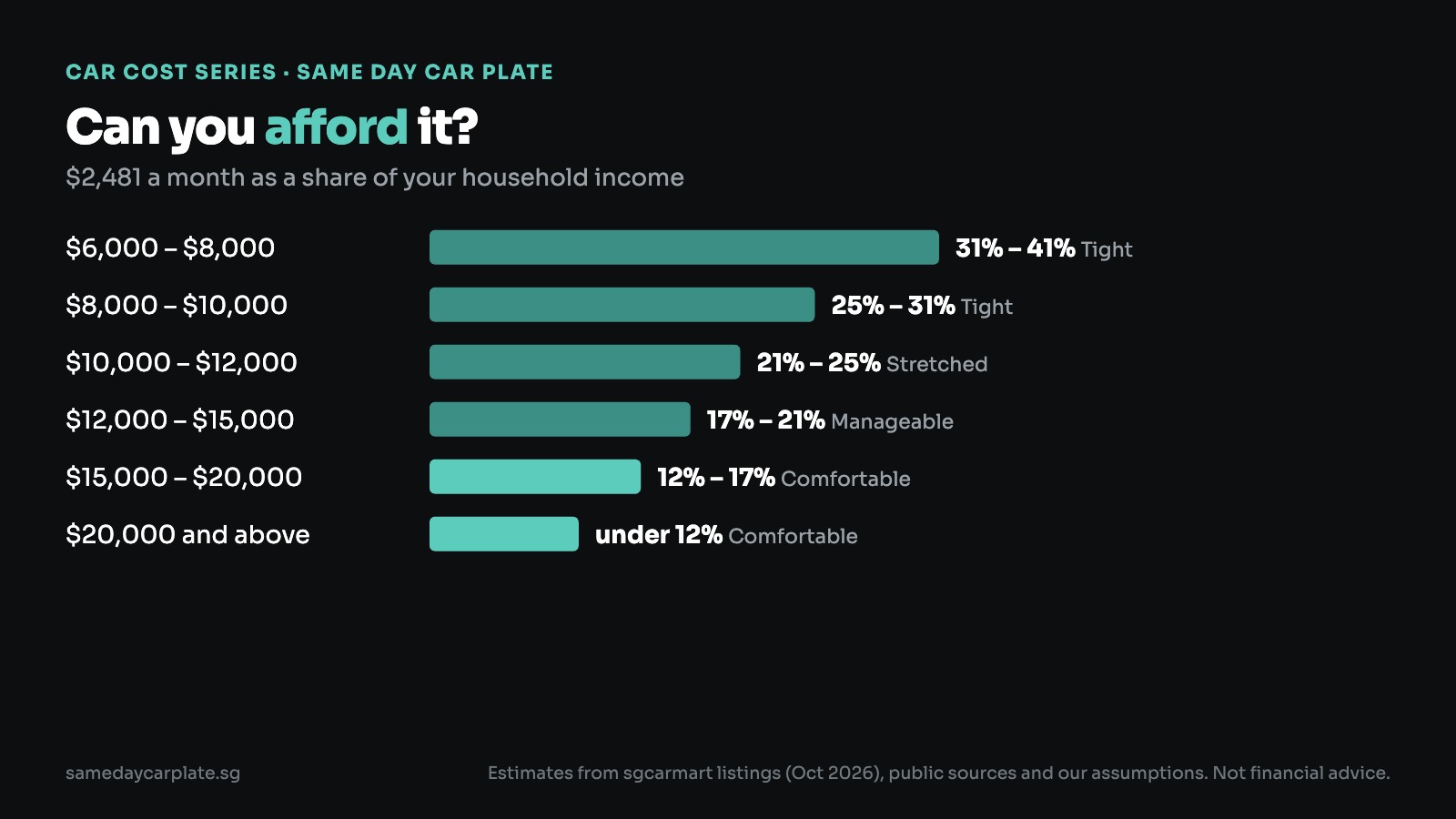
Here is the $2,481 monthly bill as a share of household income:
| Monthly household income | Share spent on the car | Feel |
|---|---|---|
| $6,000 to $8,000 | 31% to 41% | Tight |
| $8,000 to $10,000 | 25% to 31% | Tight |
| $10,000 to $12,000 | 21% to 25% | Stretched |
| $12,000 to $15,000 | 17% to 21% | Manageable |
| $15,000 to $20,000 | 12% to 17% | Comfortable |
| $20,000 and above | under 12% | Comfortable |
A common rule of thumb is that up to about 15% of household income is comfortable and 20% to 25% is a stretch. If you pay the full price in cash with no loan, the monthly bill falls from $2,481 to about $851, but you need the full $188,800 upfront.
Frequently asked questions
Is a used EV cheaper to own than a petrol car?
Charging is cheaper than petrol, and servicing can be cheaper. But road tax with the EV surcharge, insurance and tyres tend to cost more, and the PARF rebate is much smaller. The downpayment is also bigger here because the car’s adjusted OMV is above $20,000.
What are the VES and the EEAI?
The VES gives rebates (or charges surcharges) on the ARF based on a car’s emissions, and the EEAI is an extra grant for fully electric cars. Both reduce the ARF you pay, and that also reduces your PARF rebate later.
Can I use CPF for the downpayment?
No. CPF cannot be used to buy a car in Singapore.
How much should I keep aside for repairs?
We used about $4,600 for expected maintenance plus a $5,000 emergency fund. Your own figure will depend on the car’s condition, warranty cover and how much you drive.
Just bought a car? Get your plates sorted too
At Same Day Car Plate we make physical car plates in a range of designs, so your car looks right from day one. Browse our designs or WhatsApp us at 9619 9496.
Disclaimer: all figures are estimates based on public sources (sgcarmart listings in October 2026, LTA, MAS, charging operators and tyre price guides) and our own assumptions, including insurance, tyre life, brakes and the emergency fund. They are not financial or professional advice and will differ from person to person. Please check with your bank or financial adviser, and confirm warranty and free servicing terms with the seller.